Capture the job. Price it. Then run it.
Cerrax runs your quoting end to end — and the job it priced after that. Here's the whole journey, from a phone call to a closed job you can learn from.
The building, as you described it.
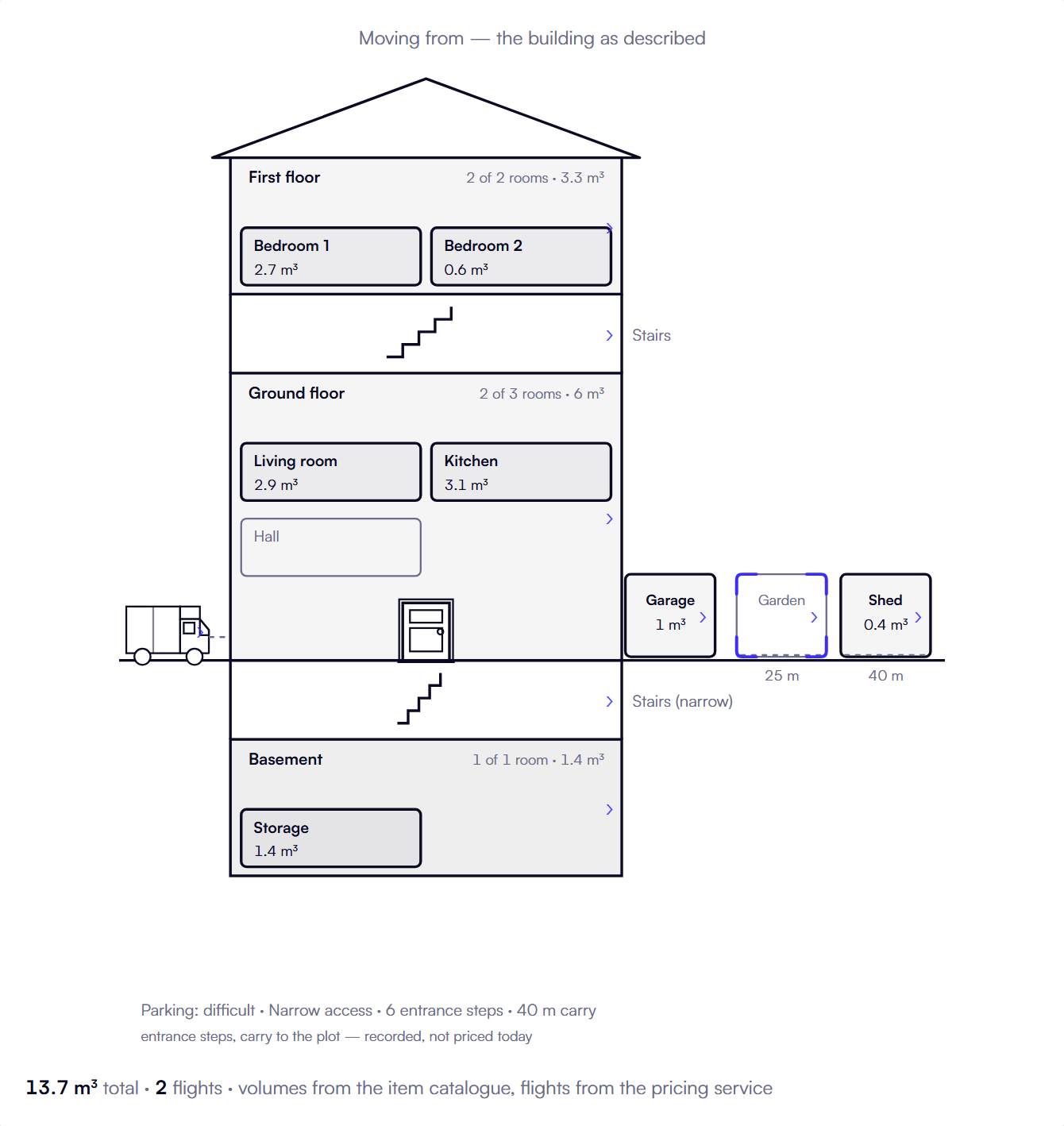
Not a form asking for cubic feet. You walk the property — floors, rooms, what is in them, the stairs between them, the shed at the bottom of the garden and how far the carry is from the van.
Everything you record has a consequence you can see. The carry distance is priced by how far it is, once you set your carry bands; the entrance steps are recorded and not priced yet — and the drawing says which is which, rather than dropping anything quietly.
Capture
Type the job like the customer said it. “3-bed house, piano, two flights of stairs” — the capture bar reads it, finds the items, and builds the job. You confirm; nothing is guessed behind your back.
Survey
Walk the building instead of describing it. Floors, rooms, what is in them, the stairs between them, the shed at the bottom of the garden and how far the carry is. Everything you record has a consequence you can see — and what cannot be priced yet is recorded rather than quietly dropped.
Price
The price assembles from the job. Volume, distance, access — every line visible, every dollar traceable to a fact of the job. If something needs your eye, it's flagged, not hidden. And if it isn't sure enough to price a job on its own, it says why and hands it to you — it never silently guesses.
Control
Your rates. Your margin. Your call. You set the numbers the engine prices with — figures you'd defend on an invoice. Any price can be overridden, and the override is kept, not swallowed.
Send
A quote page your customer can open — your firm's name on it, the price held firm, your own terms beside it, and a deposit paid on acceptance. They can add a note, a video of their home, or an extra you offer, on the same page; a branded PDF goes with it for anyone who wants paper.
Book
They said yes. Confirm it, put it in the diary, take a deposit if you want one. The diary feeds your Google, Apple or Outlook calendar. The job stops being a quote and becomes a date with a number attached.
Run
The day itself. Who is on it, which vans, how the hours were meant to go — assigned to named crew, on their phones: on my way, arrived, the load checked off room by room, damage photographed where it happened, the customer's signature at the end. If the job changed on the day, the crew says so, the office re-prices it, and the customer accepts the new price on the same page. It is the same job it priced, not a second record of it.
Get paid
Ask for the balance with a payment link, or let the customer pay from their quote page — by card, straight into your own Stripe account. Cerrax never holds your money.
Close
What actually happened, against what you quoted. The hours, the surprises, the money. A job you cannot close is a job you cannot learn from, which is why this step exists at all.
Ask
The job is done, so Cerrax asks. Every customer gets the same request three days after the move, with your Google review link — you can switch it off, but not pick who gets it, because reviews gathered only from the happy customers are ones nobody should trust. The reviews you choose to show go on your own quote page, where the next customer reads them.
Learn
The engine reads your closed jobs and, once there are enough of them, proposes a correction — which rate was off, and by how much. You approve it; the next quote is sharper. We call it calibration, and you keep it either way.
The things a job needs that a price doesn't.
Your customer's video
The customer films their home from their quote page, or from a “film your home” link you send. The video sits on the job while you price it. It shows you the job; the price still comes from the job you confirm.
Messages in your name
The quote, the booking confirmation, reminders, payment requests, a request for a video and the review ask go to your customer by email, in your firm's name. You choose which are sent. Cerrax never markets to your customers.
A quotation with your terms on it
Your own terms, what would change the price, and extras the customer can add — a waiting-time waiver, say — which land on the bill when they do. They confirm they've read your terms when they accept.
Jobs that aren't A to B
Extra stops, priced on the real route. One end handed to another firm, their fee inside your price. Tolls on their own line, at cost. Storage alongside the move. A survey visit booked and sent to the customer before any of it.
The five questions every owner asks.
Does it replace my CRM?
No. Cerrax does the job — pricing it, then running it: the diary, the crew, who is on what, and the messages about that job, sent in your name. It does not do the relationship: no contact history, no pipelines, no marketing. If it is about the job, it is in; if it is about the customer, it is not.
What if the customer under-declares the volume?
The quote states exactly what it priced — items, volume, conditions. When reality differs, the difference is visible and chargeable, not absorbed.
What about the job it can't price?
It prices almost every job. When it isn't sure enough to price one on its own, it tells you why and hands it to you — it never silently guesses. Flags are for you to read, not walls to hit.
Whose data is it?
Yours. Your rates, jobs, and customers are never visible to another firm or to the people you quote.
What if I leave?
Month to month, no lock-in. Your quotes, your data, and the calibration work are yours to take with you. Leaving is never a penalty.
See it on your own jobs.
Cerrax is not open to moving companies in the United States yet. Join the waiting list and we'll tell you the day it is.
Join the waitlist →