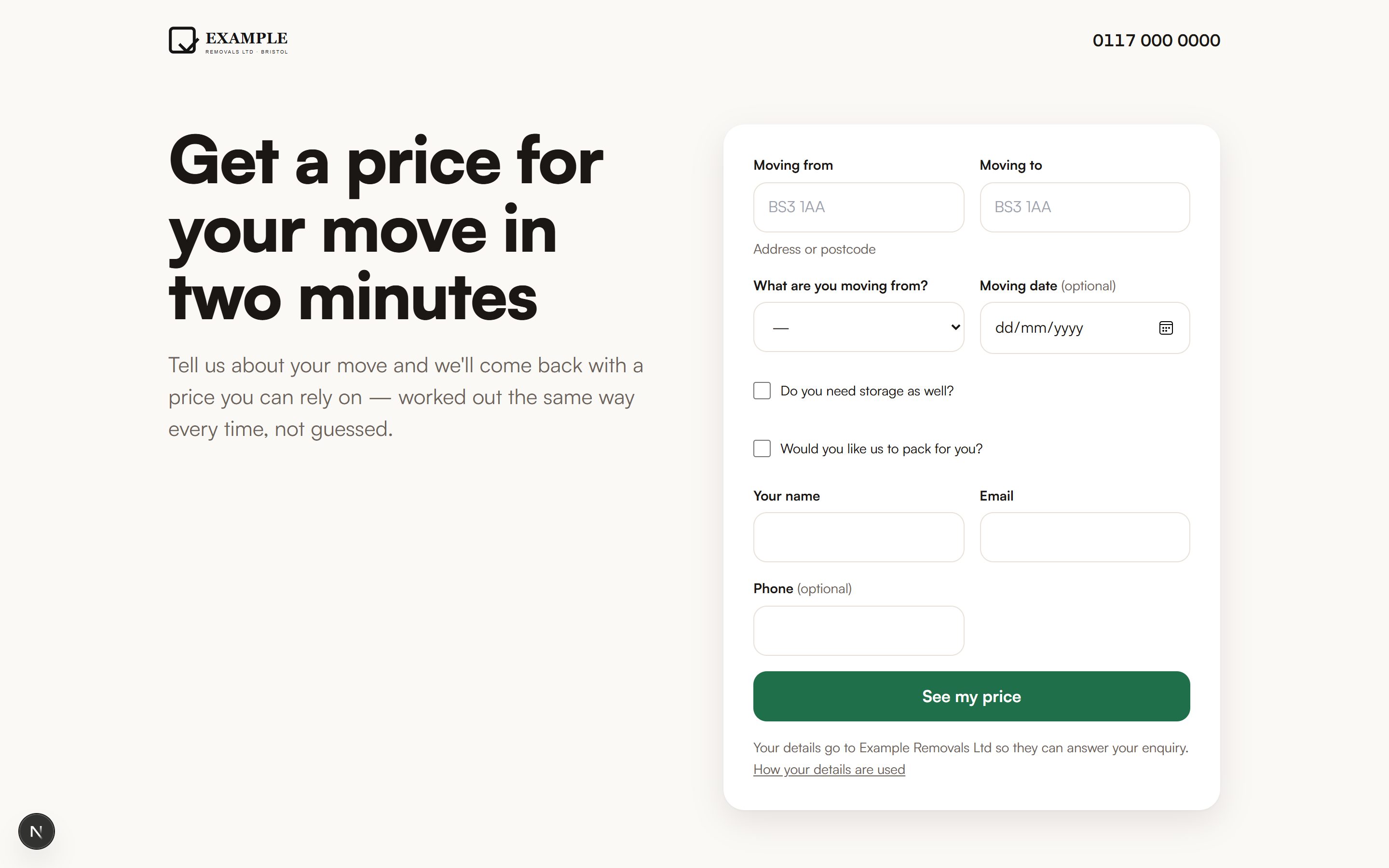
Modern
Leads with the quote form.
A firm with little to show yet — no yard photos, no decades, no gallery.
Not a brochure. A page your customers can get a price from — your name on it, your rates behind it, and the enquiry landing in your account already worked out.
Most removals websites end at a contact form. Somebody fills it in, waits, and calls three other firms while they wait. The quote form here answers — with a price worked out by the same engine that prices the jobs you quote yourself.
You still decide. The enquiry arrives in your account with the job already captured, so nothing is re-typed and nothing is lost between the form and the quote.
Each one leads with something different, because a thirty-year-old firm with a yard and a two-person outfit are not selling the same thing. You pick; the page is built from what you actually have.
Leads with the quote form.
A firm with little to show yet — no yard photos, no decades, no gallery.
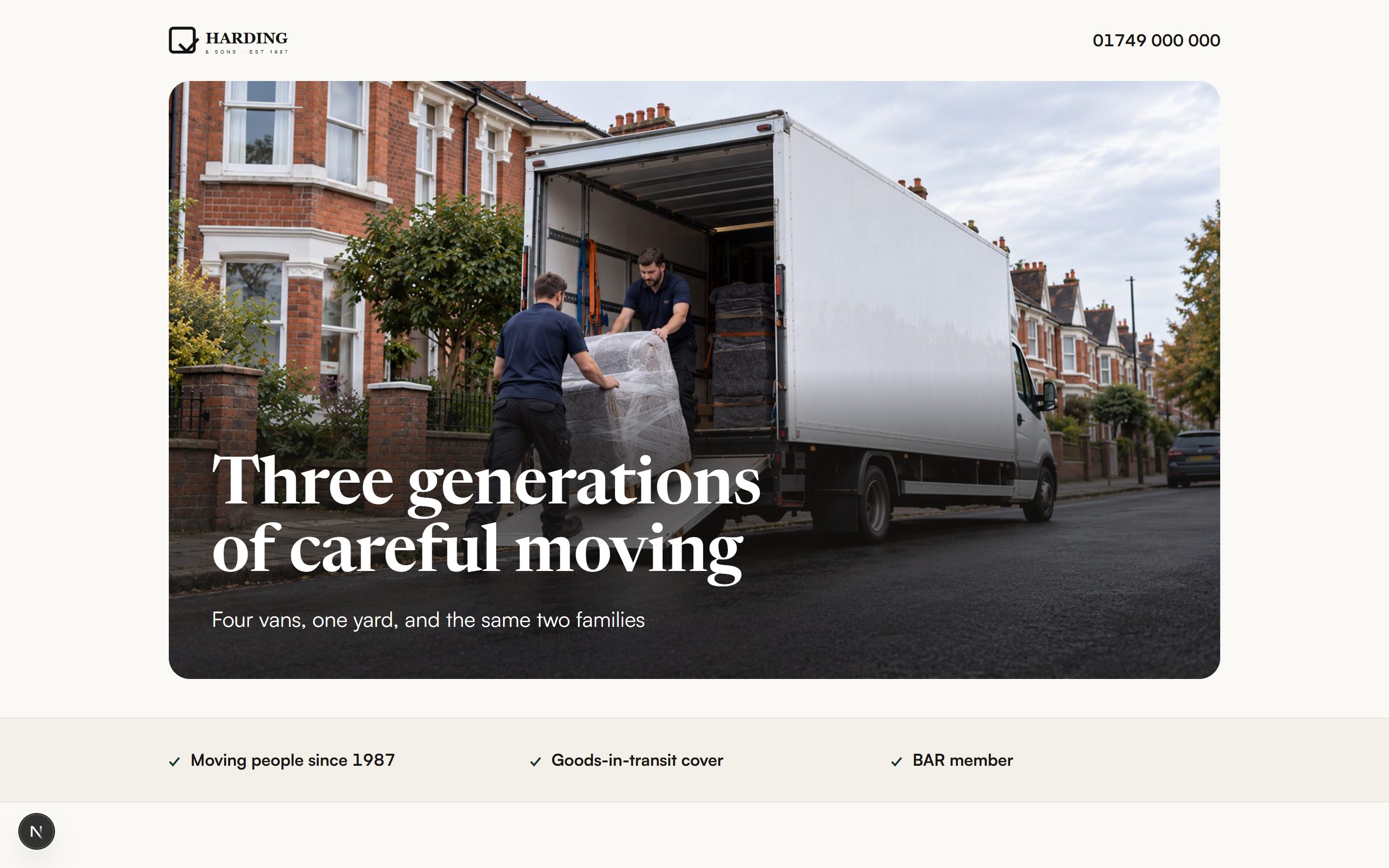
Leads with a credentials band.
The thirty-year-old firm with a yard, a fleet and a membership.
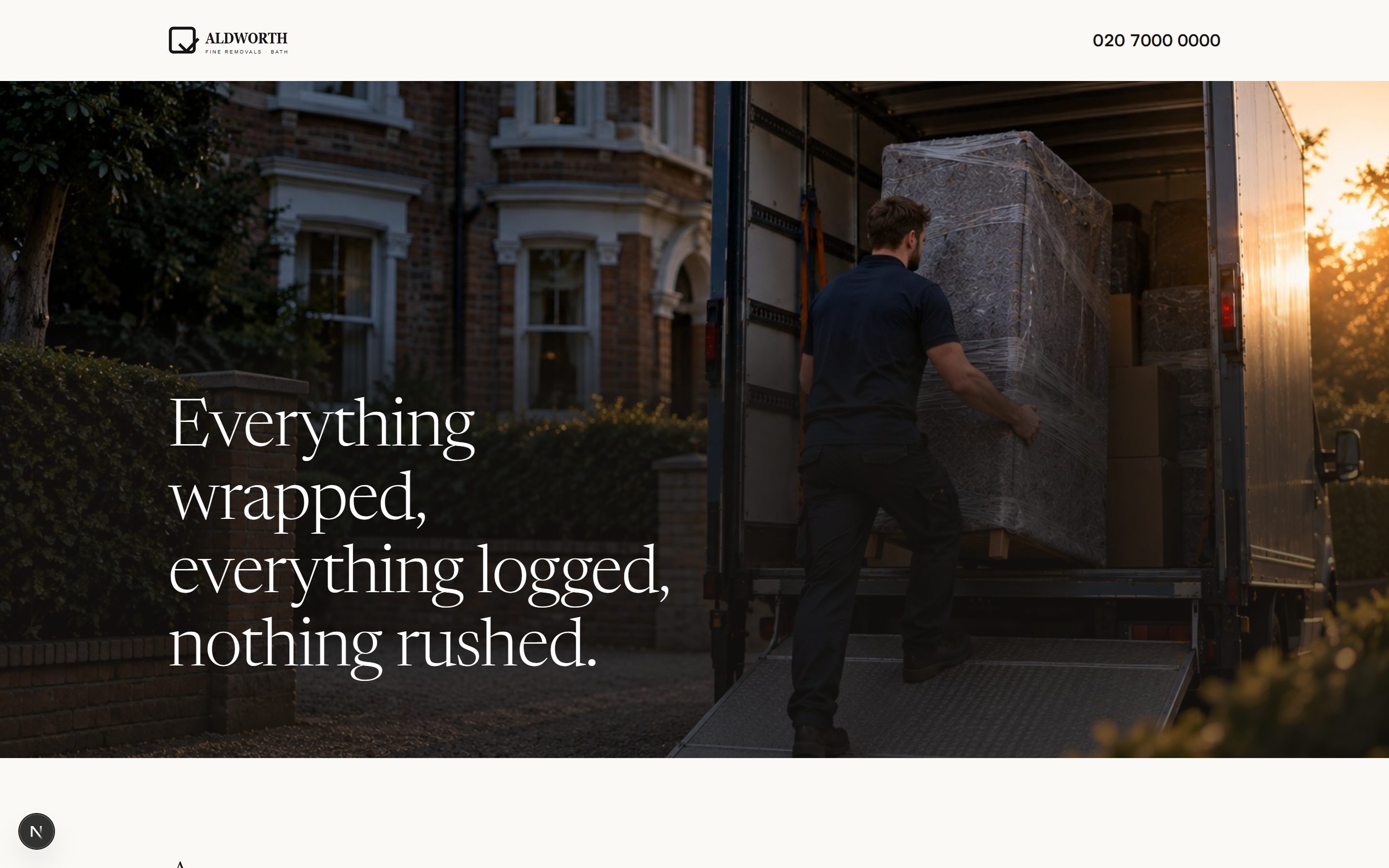
One image and one promise.
White-glove firms, chosen on care rather than price.
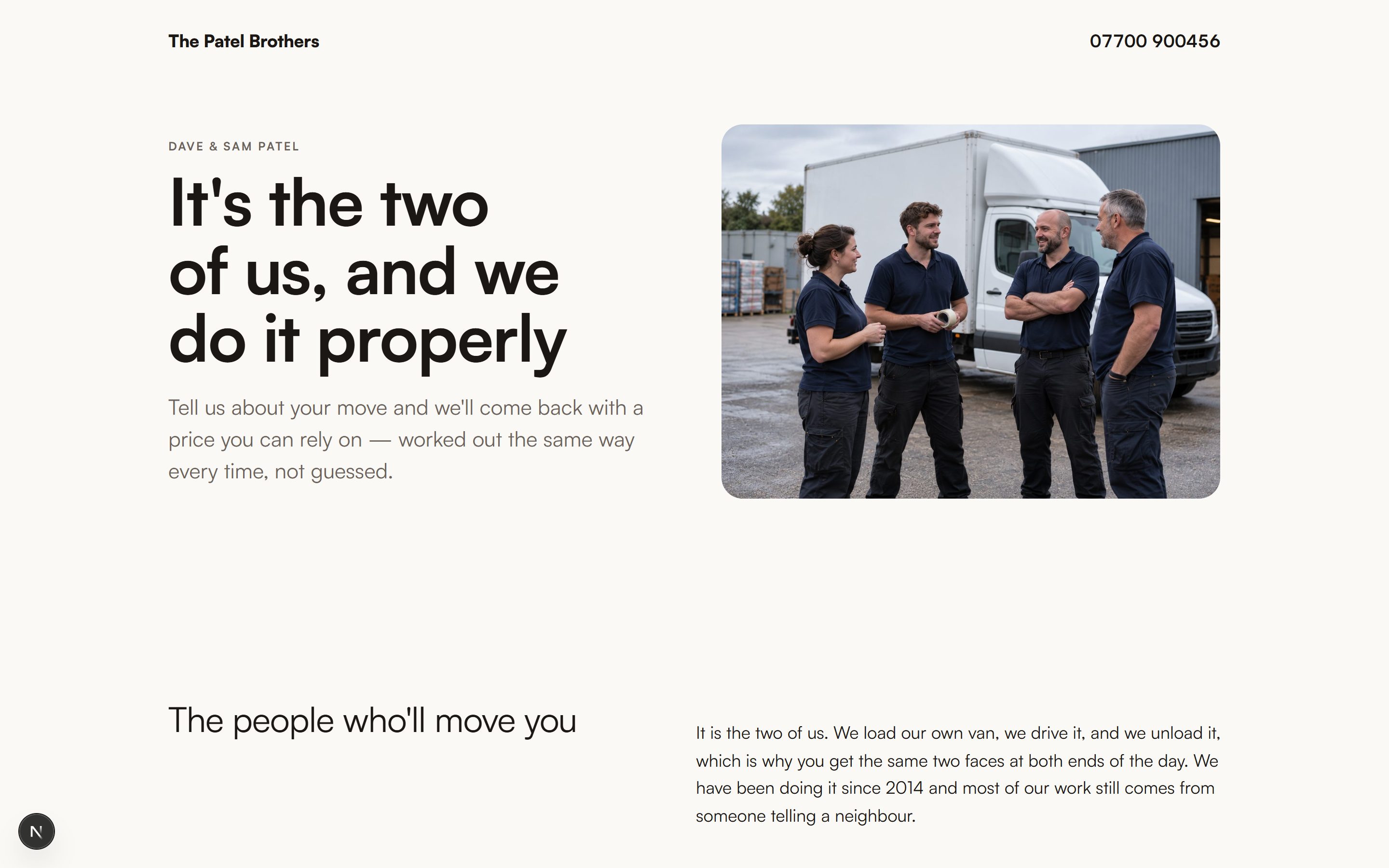
Leads with the people.
Owner-operators, where the customer is buying the people.
No logo, no photographs, no reviews, no years in business. That is what most firms in this trade actually have, and it still produces a deliberate page — with a headline, a form, and a footer that says who you are.
No empty sections. No placeholder copy. No “no reviews yet”. Everything with nothing to say stays off the page rather than announcing its own absence.
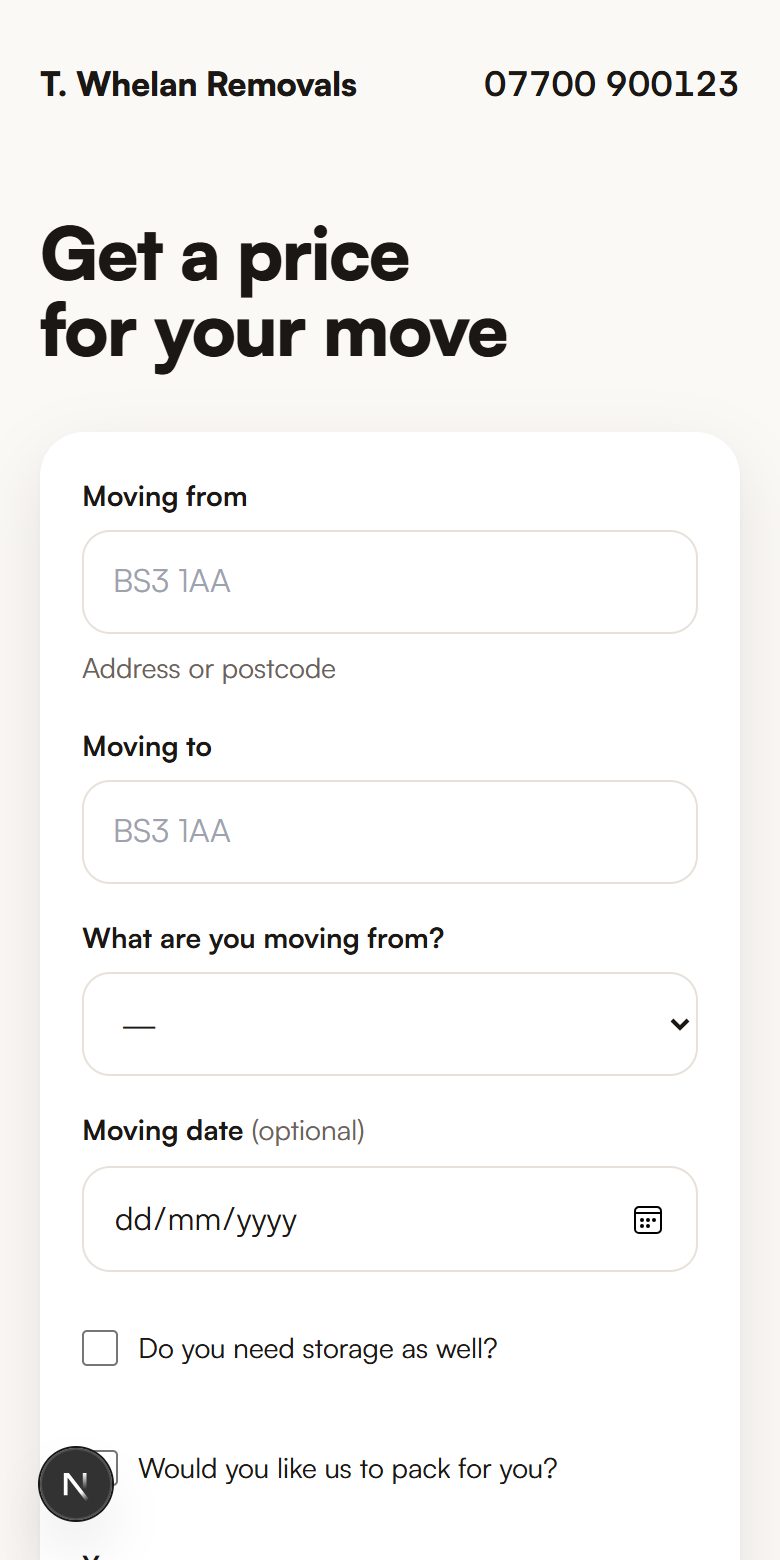
Then keep it — put the quote form on it instead. The form is the same one this page shows, embedded on your own site, pricing with your own rates.
They get a price, and the enquiry lands in your Cerrax account with the job already captured. Nobody re-types anything, and the price came from the same engine that prices your own quotes.
That is enough for a page. No empty sections, no placeholder copy, no 'no reviews yet' — the page is built from what you actually have and says nothing you would not say.
Yours. Your name, your branding, your customers' enquiries. Leaving is not a penalty — you take your data with you.
Set your rates once. The page prices with them from then on.
Start building yours